


A Silk Dressing for a Knee Replacement Wound: My First Use of SYLKE in the UK

Prof. Malek shares a case study of the first time he used SYLKE, a pure silk surgical dressing, on a knee replacement wound in the UK, what it is, why he tried it, and how the wound looked when it came off.
Most of the attention around a knee replacement goes to the implant and the operation itself, and understandably so. But a good number of the problems patients actually run into in the weeks afterwards are not about the joint at all. They are about the skin.
A wound that blisters under its dressing, or reacts to the adhesive, or weeps longer than it should, can hold up a recovery that was otherwise going perfectly well. So I pay close attention to how a wound is closed and what it sits under, and recently I had the chance to try something new for that last part. This is a short account of the first time I used a silk dressing called SYLKE in the UK, on a patient recovering from a knee replacement.
What SYLKE Actually Is
SYLKE is a wound dressing made from pure, medical grade silk. Not silk in the loose way the word gets used in skincare, but a fine woven mesh of silk fibroin, the structural protein that silk is built from, carrying a gentle adhesive that holds it against the skin.
The idea behind it is straightforward. A dressing needs to support the healing wound edges and stay put, but it also needs to be kind to the skin it is stuck to, and it needs to move the way skin moves. Around a knee that is a real demand, because the skin there stretches and folds every time the joint bends. The silk mesh is designed to stretch with it rather than tug against it, and it is meant to stay water resistant for around two weeks, which covers most of the period that matters for a surgical wound.
It was developed in the United States and is relatively new, so I want to be measured about it. The early published work is encouraging and the engineering is clever, but the evidence base is still young and some of it comes from the company behind the product. That is exactly the position a careful surgeon should hold a new material in, interested and open, but not swept away.
Why the Dressing Matters More Than Patients Expect
When I explain this to patients, the usual reaction is mild surprise that the dressing is worth a conversation at all. But skin complications are one of the more common and more frustrating setbacks after joint replacement, precisely because they are rarely about the surgery itself.
- Adhesive reactions. Some patients react to the glues and films in conventional dressings, and an angry, itchy border of inflamed skin around an otherwise healthy wound is a miserable and avoidable thing.
- Blistering. A dressing that does not move with the skin can shear against it as the knee bends, and the blisters that follow can break the skin barrier open again just as it was closing.
- Moisture and the seal. A dressing that lifts in the shower, or traps moisture against the wound, interferes with the clean, stable environment healing needs.
None of these are catastrophes, but each one can add days or weeks, and each one chips away at a patient's confidence at the very start of their recovery. If a material genuinely handles the skin more gently, that is worth my attention.
The Case: A Knee Replacement, and a First for the UK
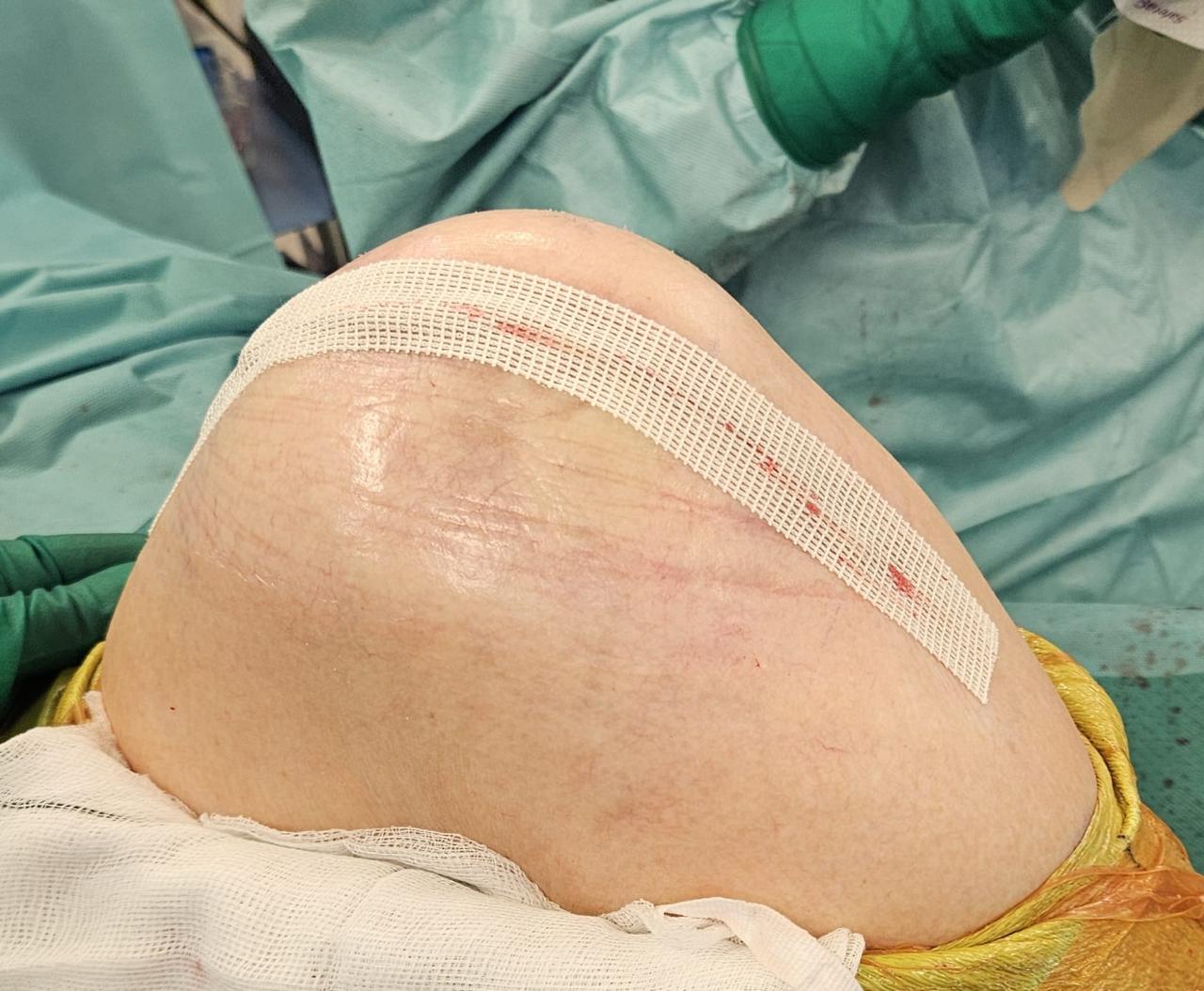
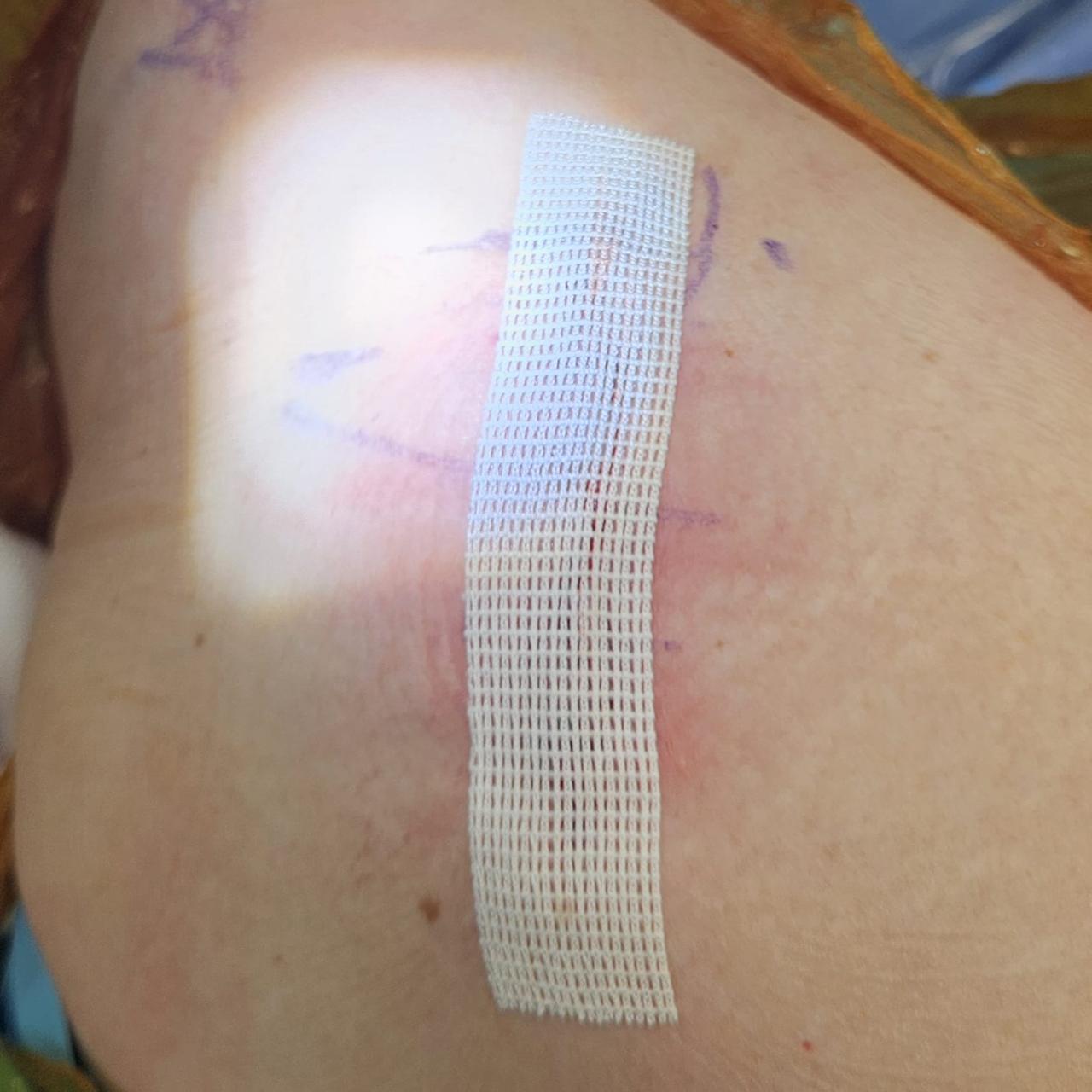
The patient was recovering from a knee replacement, with a standard wound running down the front of the knee. The operation itself went to plan, and when it came to dressing the wound I used SYLKE for the first time, which, as far as I am aware, was the first time it had been used in this country.
I will be honest that I did not make a great deal of this to the patient at the time. Being first is interesting to me as a surgeon, but it is not what the patient is there for, and I would far rather a new material earns its place quietly than be oversold. What mattered on the day was that it went on cleanly, sat flat along the line of the wound, and moved with the knee when we checked the range of movement.
The photographs below were taken during and after the operation and are shared with the patient's kind consent.
Taking It Off: What the Wound Looked Like
The more useful part of any case is not how something looks going on, but what you find when it comes off. When the dressing was removed, the wound underneath was clean and settling well, with the edges together and no sign of the blistering or adhesive reaction that I am always watching for.
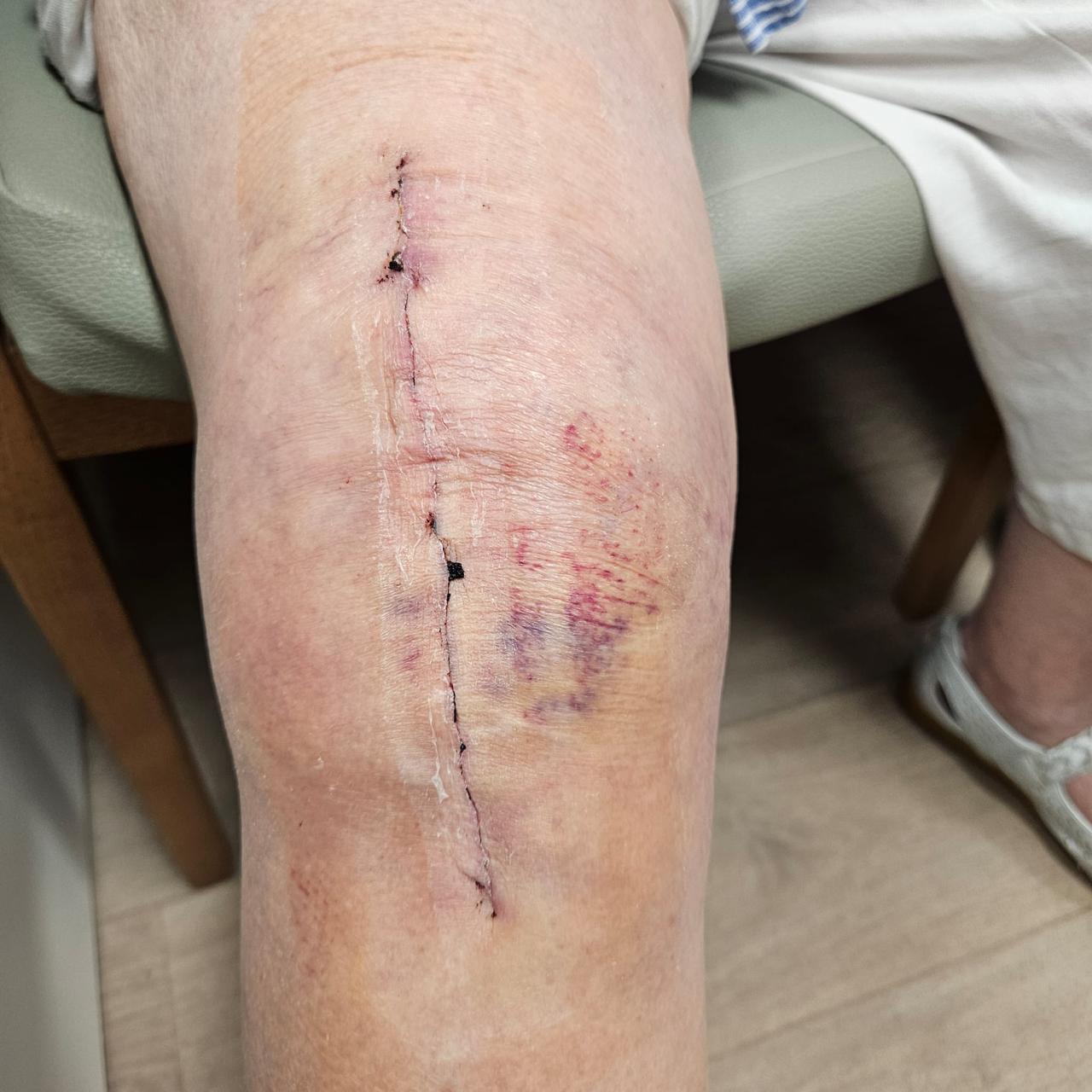
The bruising you can see is entirely ordinary after a knee replacement and has nothing to do with the dressing. What I was pleased about was the skin itself, which looked calm and intact. That is the result I am hoping for from any dressing, and here it held up well.
One case does not prove anything on its own, and I would not pretend otherwise. But it was a good start, and enough to make me want to use it again and watch how it performs over a larger number of patients.
The Honest Limitations
I think patients are owed the other side of this as plainly as the promising side.
The evidence for silk dressings is still early. Much of the published data is limited in size and some of it is linked to the manufacturer, which does not make it wrong, but it does mean the long term picture is not yet settled the way it is for materials we have used for decades. So I offer it as a considered option, not as a guaranteed upgrade.
A dressing also does not heal a wound by itself, and it certainly does not prevent infection on its own. The things that most determine how a wound heals are the ones that have always mattered, careful surgery, a clean and well aligned closure, sensible aftercare, and the patient's own health and skin. A good dressing supports all of that. It does not replace any of it.
It is also a newer and more specialised product, so it will not be the right choice for every wound or every patient, and that is a judgement I would rather make case by case than apply as a blanket policy.
What I Tell My Patients
If a patient asks me about SYLKE, I tell them what I have told you here. It is a genuinely interesting material, it treats the skin gently, it moves the way the skin around a knee needs it to, and in my early experience the wound underneath has come up well. I also tell them the evidence is still young, and that the dressing is one small part of a recovery that depends far more on the operation and on them.
Being the first in the UK to use it is not the point, and I would not want it to read as though it were. The point is whether it quietly helps patients heal with fewer skin problems and a little more comfort in those first couple of weeks. On the early evidence of my own eyes, it may well do, and that is reason enough to keep using it carefully and to keep paying attention to the results.
If you are preparing for a knee replacement, or recovering from one and worried about how the wound is healing, I would be glad to see you and talk it through.
- Spire Yale Hospital, Wrexham, 01978 268065
- Practice Plus Group Hospital, Birmingham, 03330 607558
You may also find our guide to recovering well after a knee replacement helpful, along with our knee arthritis treatment page.
This article is written for general information only and does not replace personalised medical advice. The case described is one patient's experience, individual healing varies considerably, and any decision about surgery or aftercare should be discussed with a qualified clinician who has assessed you.
Key Takeaways
- SYLKE is a dressing made from pure medical grade silk, designed to support the wound edges and stay gently in place while the skin heals
- The dressing a wound sits under matters more than most patients realise, because reactions and blistering from conventional dressings are a common and avoidable setback around a knee
- This was the first time I had used SYLKE in the UK, on a patient recovering from a knee replacement, and the wound came up clean and settled when the dressing was removed
- The early published evidence on silk dressings is promising but still limited, so I offer it as a considered option rather than a guaranteed improvement
- A dressing does not prevent infection on its own, and careful surgery, closure and aftercare still do the heavy lifting in how a wound heals
Prof. Ibrahim Malek
Consultant Orthopaedic Surgeon | Hip & Knee Specialist
Prof. Malek is a leading orthopaedic surgeon in North Wales, specialising in hip and knee replacement surgery. With over 25 years of experience and more than 2,000 successful surgeries, he combines cutting-edge technology with personalised patient care to deliver exceptional outcomes.